Home › Eye surgery › Before surgery

Before Cataract Surgery: Examinations and Preparation

Before Cataract Surgery: Examinations and Preparation

Deciding to have cataract surgery is the first step towards regaining clear vision and colours. The whole process is planned in advance so that you feel as comfortable as possible.

1. Initial and pre-operative examination

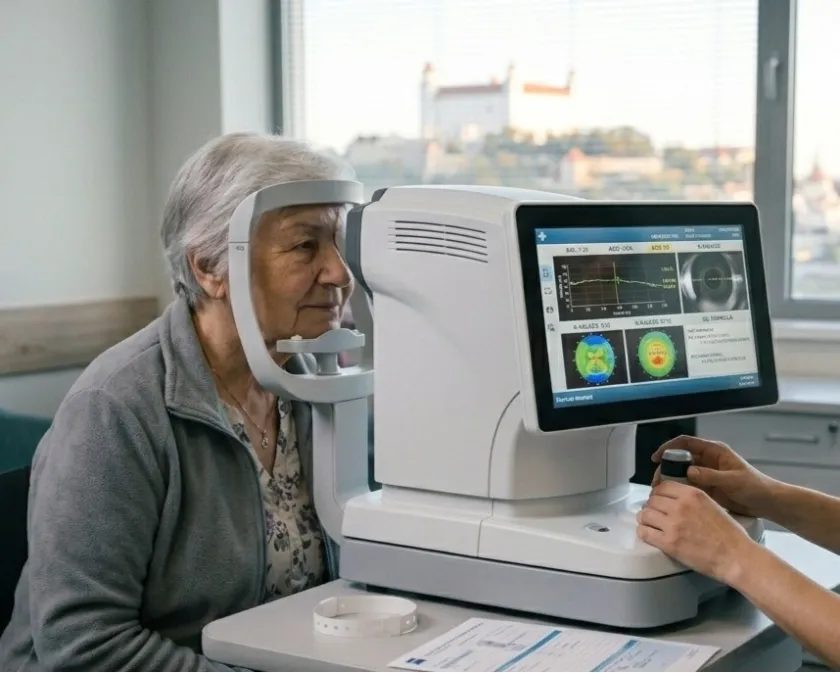
Before the procedure, your eyes need to be examined thoroughly. During the examination you will have:

  • Biometry: a non-contact measurement of the eye used to calculate the power of your new artificial lens.
  • Fundus examination: the doctor checks the condition of the retina and optic nerve to rule out other diseases.
  • OCT (optical coherence tomography): a non-contact examination of the retina at the point of sharpest vision.
  • Corneal topography: a detailed examination of the curvature of the cornea to rule out hidden changes.
  • Measurement of intraocular pressure and corneal thickness.
  • Consultation with the doctor: together you choose the type of lens (monofocal, EDOF or multifocal) according to your needs – more in the overview of lens types.

Important: if you wear contact lenses, stop wearing them before the examination – soft lenses at least 1 week, hard lenses 2 weeks before – so that the cornea returns to its natural shape.

2. What to arrange before the surgery

The surgery is performed as day surgery under local anaesthesia (numbing drops). Nevertheless, you will need:

  • A pre-operative internal medical check: confirmation from your general practitioner or internist that you are fit for the procedure under local anaesthesia (blood test, ECG).
  • Transport: you will not be able to drive after surgery, so ask someone close to you to pick you up.

3. The day of surgery: what to expect

Your whole stay takes about 2 to 3 hours; the procedure itself takes only 10–15 minutes.

  1. Preparation: you receive numbing drops and drops to dilate the pupil.
  2. The procedure: you lie on a comfortable operating bed and perceive only light and the flow of fluid. The surgeon removes the clouded lens and replaces it with a new, clear one.
  3. After the procedure: the eye is covered with a sterile dressing or shield, you receive treatment instructions and after a short rest you can go home.

4. Things not to forget

  • Clothing: comfortable and easy to put on.
  • Food: you can have a light breakfast and take your regular medication, unless the doctor has advised otherwise.
  • Hygiene: do not use make-up or creams around the eyes on the day of the procedure.

5. Complications

Complications are very rare, but they can occur. That is why it is important to entrust yourself to an experienced surgeon, who can often manage them without affecting the final result. In some cases a special instrument – a vitrectome – is needed to ensure the safe position of the lens and to remove traction on the retina. What to do after surgery and when to contact the doctor can be found on the page After surgery.

Related information

Frequently asked questions

Yes, you can have a light breakfast and take your regular medication, unless the doctor has advised otherwise.

The whole stay takes about 2 to 3 hours; the procedure itself takes 10–15 minutes.

No. Arrange transport – you must not drive after surgery.

Book a consultation

Assoc. Prof. MUDr. Ivajlo Popov, PhD. personally performs the examination and the surgery.

Consultations and examinations: Ambulancia Oftalentis, Saratovská 24, 841 02 Bratislava – Dúbravka
Office hours: Monday 16:00–18:00, by appointment only; other times by arrangement via e-mail

Surgery: the place of surgery is agreed during the examination